The Strategic Blind Spot: Why Companies Keep Solving the Wrong Problem
As artificial intelligence absorbs routine knowledge work, the half-life of technical skills is collapsing. Companies are responding by pouring billions into adult reskilling, aggressive recruiting, and corporate training. Yet these investments address symptoms, not causes.
According to the World Economic Forum's 2025 Future of Jobs Report, over 60% of companies believe skills like technological literacy, creative thinking, resilience, and lifelong learning will grow in importance between 2025 and 2030. Nearly 60% of the global workforce will require additional training by 2030. But what if the most leveraged intervention happens decades before an employee ever joins the workforce?
A new analysis from Wharton's neuroscience and business researchers reframes early childhood education (ECE) not as a social responsibility, but as a strategic economic imperative — the biological foundation of all future human capital.

Brain Capital: The Asset Class Most Companies Ignore
Brain capital is the reservoir of brain health and brain skills from which all other forms of human capital emerge. Unlike financial capital, it compounds through development — and its returns appear in productivity, entrepreneurship, health outcomes, and economic resilience.
Key data points every executive should track:
- The Global Brain Capital Index shows brain capital is a primary driver of GDP — and is currently in decline globally.
- A WEF and McKinsey Health Institute report estimates that investing in the holistic drivers of brain capital could generate up to $6.2 trillion in cumulative GDP gains.
- A 2025 analysis found that global time in school nearly doubled between 1970 and 2015, yet skills-adjusted years of schooling barely kept pace.
- A Brookings study found that only 37% of American adults reach a level of numeracy reflecting complex reasoning.
- OECD's PISA data repeatedly shows that standard academic measures poorly predict creative thinking in 15-year-olds.
The strategic framework:
- Developmental timing compounds. Nobel laureate James Heckman demonstrated that investments aligned with developmental windows generate accelerating returns over the lifespan.
- Misalignment creates capital drag. Late interventions are less efficient, more costly, and dilute lifetime returns on brain capital.
- Whole-child development is not optional. Cognitive, physical, social, and emotional systems are deeply integrated — movement shapes brain architecture, social interaction scaffolds language, and play strengthens executive function.
For a deeper look at how timing and early diagnosis determine long-term outcomes, see this analysis on why nearly half of mergers fail and how to spot trouble early — the same principle of path dependence applies to human capital development.
The AI Paradox: Why Smarter Tools Demand Wiser Humans
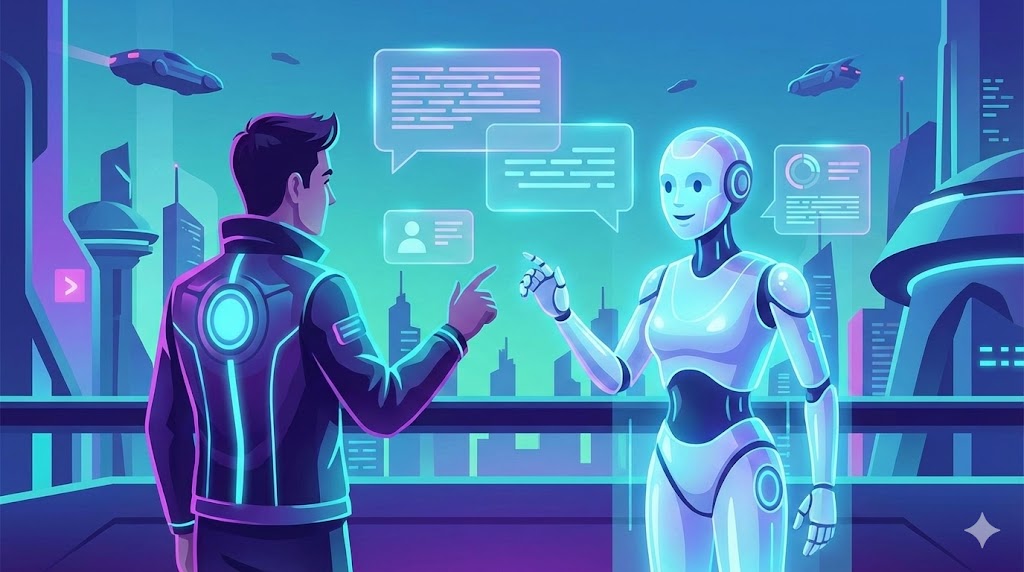
The rapid adoption of AI-driven educational technologies introduces both opportunity and risk. Personalized learning platforms promise acceleration, but when personalization becomes synonymous with acceleration, children may receive more customized content while experiencing fewer opportunities to move, collaborate, negotiate, create, and persist through shared challenges.
The lesson from AI itself: Intelligence does not emerge from reasoning alone. Foundation models like Claude or ChatGPT learn by compressing enormous amounts of data into generative models capable of pattern recognition and adaptation. Human children build far richer foundation models — but only through embodied, relational, and experiential learning.
What business leaders can do — five concrete actions:
- Expand the investment horizon. Treat talent development as a lifecycle strategy, not a workforce strategy. Partner with schools, early childhood programs, libraries, and community organizations.
- Treat ECE as economic infrastructure. Just as businesses advocate for transportation and digital connectivity, champion policies that strengthen brain infrastructure.
- Rethink corporate philanthropy. Investments in high-quality early education, teacher development, music, movement, and socioemotional learning are long-term workforce investments — not charity.
- Become intentional customers of education. Signal to educators and policymakers that you value adaptability, collaboration, and judgment — not just higher test scores.
- Continue adult learning — but recognize its role. Corporate education is indispensable, but its greatest value is realized when it builds on strong developmental foundations established earlier.
Investors tracking long-term market patterns may also find parallels in this analysis of how correlation neglect creates predictable market patterns — both domains reward those who look beyond surface metrics.

Analyst's View: The Bottom Line for Business Leaders
The question is no longer whether companies should care about early childhood education. The question is whether they can afford not to. Organizations that thrive in the AI era will not simply be those deploying the most advanced technologies — they will be those cultivating the most adaptive people.
Local Market Implication (US/Global):
- Action 1: Audit your talent pipeline's upstream dependencies. Map where your future workforce originates — which school districts, early education programs, and community organizations feed your talent pool. Then invest in those ecosystems the way you would in any critical supplier relationship. Companies like Salesforce and IBM have already begun shifting from pure reskilling to upstream education partnerships; the ROI data now supports scaling this approach.
- Action 2: Reframe your CSR narrative around brain capital. ESG reports that treat education philanthropy as a footnote miss the strategic story. Quantify your early education investments as brain capital contributions with measurable long-term workforce returns — this resonates with investors who understand compounding assets.
Risk to watch: If businesses continue to over-index on adult reskilling while underinvesting in early development, they will face escalating talent costs, shrinking adaptability in their workforce, and a widening brain skills gap that no amount of corporate training can close. The $6.2 trillion GDP opportunity is real — but only for those who act on the science, not just the sentiment.